Friday, 7 September 2012

Sustainable food consumption: How can we be part of the solution?


Hunger has three meanings (Oxford dictionary 1971).

1.       The uneasy or painful sensation caused by want of food, craving appetite, also the exhausted condition caused by want of food.
2.       The want or scarcity of food in a country.
3.       A strong desire or craving
World hunger as we have discussed as a group, refers to the second definition. Through our research we have discovered the number of hungry people in the world is 925 million (2010).
Of that;
·         19 million come from developed countries
·         37 million Near East and North Africa
·         53 million Latin America and the Caribbean
·         239 million sub Saharan Africa
·         578 Asia and the Pacific
The amount of people malnourished is currently unknown.
Factors which contribute to hunger in certain countries include:
poverty, the ability to afford food, lack of education, and an increasing population, lack of family planning clinics and cultural and religious beliefs and climate change.
These factors are especially true for areas within the Philippines, Thailand and Indonesia.
The average women in these countries have 7 children and try to support their families simply from catch of the sea. In different parts low rainfall encroachment into other areas is causing food security issues, no crops, no rain and more frequent drought events.
The number of hungry people has increased since 1995 and is due to three factors:
1.       Neglect of agricultural relevant to very poor people in governments and international agencies
2.       Current worldwide economic crisis.
3.       Significant increase in food prices

1 in 7 people are hungry
In Australia alone 2 million Australians do not eat enough food daily and around 1 million children go to school without breakfast or go to bed without dinner. Australia is known as the lucky country because we have the ability to produce enough food to feed 60 million people, which is equivalent to feeding the nation three times over. But still there are people that are hungry in Australia. We are also a very wasteful nation throwing away 4 million tonnes of food every year due to quality and appearance.
We have learnt the world has the ability to feed everyone, it is estimated world education produces 17% more calories per person today than it did 30 years ago, despite a 70% population increase.
The key message:
POVERTY IS THE PRINCIPAL CAUSE OF HUNGER
Ok so what can we do?
1.       Reduce greenhouse gas emissions
(a)    Farming more efficiently
(b)   Efficient pasture production
(c)    Choice of pastures to lower methane production
(d)   Less use of nitrogen based fertilisers – lowers nitrous oxides
2.       Education
(a)    Lack of knowledge about contraception
(b)   Family planning
(c)    Development of green zones
3.       Food security
4.       Food banks
5.       Emergency feed centres

Food from our school farm being sold at Friday Staff morning tea by Junior SRC members


Efficiency Gains in Beef Production

These are some of the ways in which efficiency gains in beef production have been achieved in Australia:
  • Efficiency in water management
  • genetic advancement for cattle
  • improving the health of soil
  • reducing emissions
  • selective breeding
  • continuous ground covers
  • extensive arid farming
  • Sectioning paddocks for grazing. 


The five key areas of a healthy productive and diverse ecosystem are
  1. land use and management,
  2. biodiversity,
  3. soil and water, 
  4. controlling feral animals and weeds,
  5. greenhouse gas and energy management.
For example in 1990 the Spooner family of Avocet south of Emerald in Queensland,set up part of their property as a nature refuge for biodiversity for future generations. Their cattle are grazed under strict grazing conditions.

These are the future farmers who are part of a new generation who take their roles as custodians of the land very seriously.


Feedlots across the country that produce grain fed beef, such as 'Peechelba' in Victoria are finding ways to recycle waste and minimise their environmental impact. 'Peechelba', run by Gina Lincoln, sells certified organic manure produced by cattle on the property to landscape gardeners viticulturists and local gardeners looking to improve soil structure.

Monday, 3 September 2012

Bill and Bess

Thinking about Bill and Bess and their succession planning issues, they have worked hard all their lives to produce enough food for an ever growing population and just as they are about to pass their property down to their daughter along came a developer and decided to build a road through the middle of their property.


Do you think the Main Roads Authority thought about how Bill and Bess would be affected? That's just it as you have been saying we don't think enough about the agricultural industry before the masses of infrastructure are built around us. But as the population has grown and the amount of people the average farmer feeds continues to increase, farmers will continue to adopt new technologies and improved production methods to meet these trends.
So as for Bill and Bess and their wonderful daughter, I think they will be able to continue farming this land successfully using sustainable farming methods with the adoption of new technologies.

Thursday, 30 August 2012

Did you know?

Over 3 billion people now rely on food grown somewhere else and transported to cities, a number likely to grow to an astonishing 7 billion by 2050!

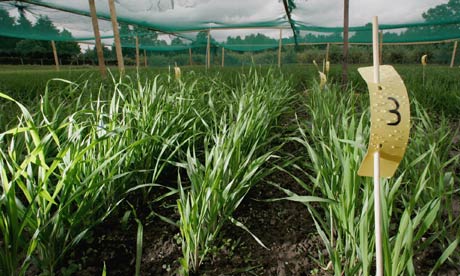
Trials of genetically modified crops.


In the next 50 years we will need to produce as much food as has been consumed over our entire human history just to feed the world's population.


Australia feeds not only its own population but another 60 million people in other countries. The average Australian eats about 33kg of beef per year. Most Australian families eat two meals of beef each week.

We are one of the most efficient producers of cattle and the second largest exporter of beef in the world. We supply about 4% of the world's beef. These exports are worth over 2.5 billion dollars to our economy.


Australian beef cattle being expoted to Japan

Live cattle exports going to the Middle East


Tuesday, 28 August 2012

Are agriculture innovation, efficiency gains and intensification important for our quality of life?

Topic:

Agriculture is always changing.

 Sometimes the change offers opportunities

 for innovation and improvement though

 there are always obstacles to overcome.
Talked about the meaning of the key words:
Efficiency gains: ability to produce a high quality animal for a suitable market using the lowest amount of resources (including feed, water, management)and still meeting market requirements. Market requirements may include: fat score, organic or non-organic farming methods, consumer demand, and healthy product and weight of the animal.
Intensification: includes the use of resources (labour, area, equipment, expenses)
Quality of life:  good animal management (husbandry activities) = happy consumers, happy farmers, happy cattle
Succession Plan: management, long term goals for the farmers to sell the farm to different members of the family
Productivity: Cost v’s product
Scenario
Farmer Bill and Bess currently feed 600 people from their mixed farm of x hectares. The Dept. of main roads is going to resume Y amount of land for the new highway going past their farm.
They also have an opportunity to sell z hectares for a housing development. They want to continue farming and succession planning for their family of 1.8 children and allow their daughter to continue to run the farm business when they retire.

 How can they do this?


opportunities
threats
Money from selling the land
noisy
More people around - jobs
pollution
neighbours
Children could hurt themselves on the new road
Better access to human resources such as sewage and clean water and internet connection
Less land to farm on
Better access to farming staff
More likely to be more development in the area
Transport availability for farm products
They may need to reduce their stocking rate


Services may be cheaper
Problem with neighbours
More social opportunities
Less privacy


Group’s responses
1.     A millionaire wishes to buy the property? OPPORTUNITY/ THREAT
2.     They have another child? Threat and an opportunity
3.     Social gains, fashion gossip, friends, kids involved in a more social life
4.     There could be a car accident/ car could run into the house? THREAT
5.     They will get more updated technology: OPPORTUNITY
6.     MORE CUSTOMERS: OPPORTUNITY/ but will they be able to meet consumer demand
7.     There could be more C02 pollution? THREAT
8.     Livestock could die causing them to lose their way of life? THREAT
Swot analysis (please refer to picture from white board)


our SWOT analysis

Learning about innovation
Focus Question: How can Bill and Bess continue farming and succession planning for the family of 1.8 children and allow their daughter to continue to run the farm business when they retire?
1.     Gather all background information
2.     Clarify the main priorities
3.     The first meeting
4.     Investigation
5.     Decisions
Efficiency gains: Can they still meet consumer demands for 600 people on less land? Through technology, innovation and development and uptake of new varieties new techniques for the family.
Are they still going to have the same quality of life?
Productivity: Can they produce the same on smaller land area? Think about stocking rate? Animal welfare?

Solutions
1.     The cost of new equipment from sale of housing may enhance the productivity of the farm
2.     Ensuring the family and the farm are meeting their productivity goals and meeting consumer demands may compromise the welfare of their stock?
3.     The new housing developments may bring people with education and farm skills which they could bring to the farm
4.     Volunteer work may be an option
5.     Put strategies/ innovations in place with the money gained from building the road to ensure survival of the farm for future generations
Please refer to some pictures gained from this weeks work

Stuart and Ashlee
Sweetie on the move
at the farm
"Can I stay here with Nulla, Creamy and Finch?"
Zia and Creamy our Square Meater
Marni and Ashlee
Stuart
Creamy
Planning and Brainstorming at the farm

Finch is very cute